Saturday, January 30, 2016

Blog Review Life Hacker Rating Blog

Blog Review
I am reviewing the life hack blog for this class. This blog has ideas to help you in your life from technology to exercise.
  • recurring themes - 10, It has only one themes per blog.
  • author voice- 10, because the post are easily understandable.  
  • multi media- 10, This blog uses pictures, video to make the reader understand what the point is.
  • good writing- 10, there is no confusion about the post or misleading.
  • frequency- 10, they post more than one blog post a day.
  • credibility- 7, I did not find any work cited page for the picture and video.
Nirakaran Bikram Malla
Everyday Carry Blog- QC List

Recurring Themes- 8. This blog is for folks who enjoy the great outdoors, not the homebodies who don't. The content is usually driven by new clothes, gear, or gadgets that allow for a proper stylish stroll through the woods.

Author Voice- 5. The posts are, for the most part, just glorified sponsored content. More often than not it feels like I’m talking to a salesperson, not someone who can tie a half-hitch.

Multimedia- 7. Everyday Carry uses many forms of multimedia, but it almost all appears as ads. I don’t feel like they use it to help convey an opinion on the gear being showcased, but as attempts to pursue the reader to buy it.

Good Writing- 7. I’ve yet to find any grammatical errors, however the overall message to the reader has the ‘buy what we use’ feel as opposed to ‘here’s one piece of gear you could use’. Consumerism as an ideology is pushed, not any clothes, gear, or gadgets that enhance hikes, camping trips, or even work in the field.

Frequency- 7. While posts are frequent, it seems they just replace one piece of gear for the next new one, not the superior product. The content is ample, just not sufficient for anyone truly dedicated to exploring outside the concrete jungle.

Credibility- 6. Links are included, but not frequently. Overall the site is for a niche group of folks- not only is Everyday Carry for those of us who like to traverse all that Mother Nature has to offer, but for the ones who have disposable income to continuously update their clothes, gear, and gadgets.

Dan

LifeHackers Blog Review

        www.Lifehackers.com
    When it comes to having a successful blog many different qualities come into play. The blog has to grab people's attention in distinct ways and make them want to stay and or come back every time the author posts. Qualities like themes, author's voice, the multimedia used, the quality of the writing, how often the author posts and if the author gives credibility to others when needed are extremely important in a blog. A great example of a successful blog according to these six qualities would be LifeHackers by multiple authors. (Yazmin Olvera)
    Lifehacker.com is all about ways and things to do to make life easier or better.  Most of the posts on their blog keep true to that theme, with posts such as “Top 10 ways to fix your terrible posture” and “This weather cheat sheet makes sure you always have factoids in your back pocket.”  It’s nothing huge, but they are little things, that if you do them, will make your life easier or better in some way.  My only issue with the blog is that in between the real posts are ads and some of them are designed to look like real posts with titles that are similar to real life hacks. (Dustan Sepulveda)
    This raises the question of how can a blog keep a constant theme with different authors and even ads mixed together.  On the issue of author voice, lifehacker.com succeeds surprisingly well.  The individual authors all know the theme of the blog and structure their content to match that theme.  Sure, posture has nothing to do with a weather cheat sheet at first glance, but really both authors want to help improve others’ lives.  The blog entries are all written with a conversational style that makes them easy to read and also ties them together, so the reader doesn’t notice the authors are in reality different people. (Dustan Sepulveda)
    The multimedia choices Lifehacker utilizes for blog entries are not only helpful, but are also appropriate for the audience. As this blog is frequented more often by the reader, it will become apparent that a team of professionals sit behind the curtains. At no time does the reader become inundated with pop-up ads, misleading posts, or click bait. To pay the bills, there are ads, but not an overbearing amount to deal with. (Daniel Bell)
The quality of writing of Lifehacker offers is exceptional. Regardless of which team member wrote any given article, the author's voice is relaxed, straight to the point, and feels like an attempt at a conversation with the reader. The blog, as a whole, is organized and easy to read. (Daniel Bell)
In this blog, the group post more than once a day. There are more than one person in this group that post frequency.(Nirakaran Malla)
At the bottom of each post, they illustrate the person's name and gives credit to the person who put the picture together but they don't give us the link where they got the picture from. (Nirakaran Malla)
LifeHackers has great tips and tricks for an everyday use. Going from health, lifestyle, recipes, to technology, shopping deals and educational tips. The range of topics they write about is so spread out, that it seems like they cover just about everything! This blog does such a great job on keeping their audience engaged and entertained everyday of the week that it keeps them going back to www.lifehackers.com every time. (Yazmin Olvera)

lifehackers ratings


  • posts frequently, more than once a day sometimes
  • different everyday life hacks; from technology to cooking to life and health etc..
  • the picture chosen to represent the blog is appropriate
  • no misleading titles
  • the website as a whole is easy to read, and organized
  • has multiple authors
-Theme: 7 they do have the same topics they write about every week but not on a specific day, for example they have “best deals of today” but they do it on random days of the week.


-author's voice 9 very relaxed and straight to the point, like having a conversation with their audience.


-multimedia 8 their pictures were helpful and made the blog easy to follow
 
-good writing 8 no grammatical errors, relaxed writing style


-frequency 10 they post more than once a day


-credibility 9 at the bottom of each post they cite where they got the illustrations, and photos from. (no links)

          Yazmin Olvera

Freakonomics QC ratings


My QC Ratings:

Recurring themes: 10 – Always question commonly held beliefs

Author Voice: 10 – Make compelling arguments in each post.  Uses common speech to explain complicated ideas.

Multimedia: 9 – Integrates an audio version of the blog entry on most posts

Good Writing: 5 – The blog is mostly a transcript, so not much original writing

Frequency: 3 – Last post was 9 days ago.  They post, at most, 1/week.


Credibility: 10 – Best selling author on similar topics

Dustan S

Reading Assignment Chapter 3 & 14


Chapter 3                
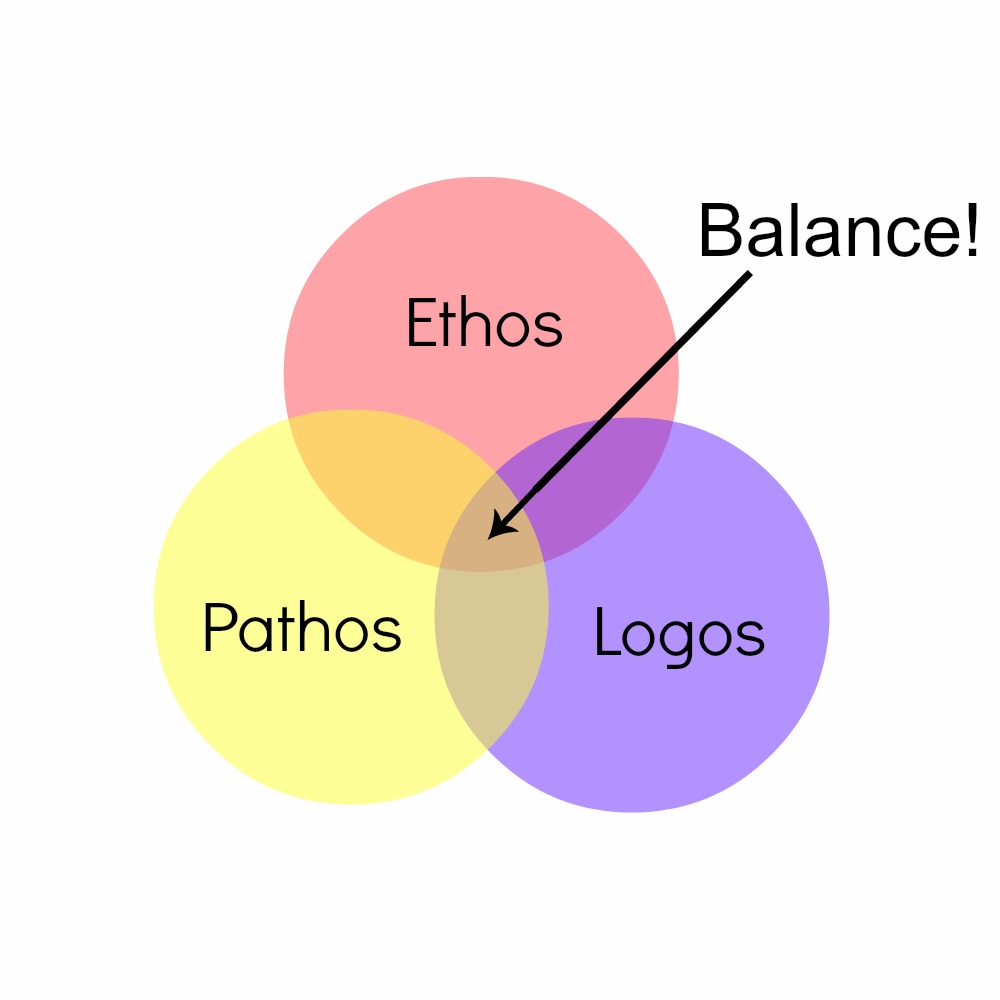
            When I was reading chapter three from the book ( The Bedford Guide for College Writers); I found Ethos, Pathos, and Logos to be helpful. I could use these three appeal to help me write a better essay. It would also make the reader easy to understand what I am pointing towards. The main point n this reading chapter was Ethos, Pathos, and Logos.


Chapter 14
          Observing the Characteristics of an Image stuck out the most. I was interested when it said " Observing it objectively rather than probing what it means or signifies". It is teaching us that focusing on an objective is better than trying to figure out the meaning of the picture. But, the most important topic in this chapter would be Function Decision because in the picture, it shows a car without the top and people in the car are having a blast, while in the right hand side of the car; there is another car with people but they are not happy with their life. If people were given a choice to choose a car, they are most likely to pick the car with no top because people in the car are having fun. So placing your object in the right place makes the difference between buying your product and not. 
 

Work Cited
- https://ydraw.com/video-scribing/ethos-pathos-logos/
Nirakaran Bikram Malla

Friday, January 29, 2016

I REALLY have to go!

Chapter 14 was interesting to me because I am aware that ads are meant to convey a message and a lot of times it’s subliminal, so I purposely try to avoid them because I don’t know what they’re putting in my mind.  I hardly ever watch TV for that same reason.  I do not want to put things into my brain and my memory that are not beneficial to me.  That said, there was one advertisement that sticks out in my mind.  It’s for Fresh Step cat litter.  It's a funny ad because you'd never see a cat do this just because he can't smell the cat litter, so he doesn't know where to go pee.

My grandmother has Alzheimer’s and it’s progressed quite far, but years ago, she would flip through magazines to keep herself busy.  She didn’t have the attention span to really read an article, but did look at the pictures, including the ads.  Whenever she’d come across the ad above, she’d get a good laugh out of it.  Her short term memory was bad, so when she flipped through the magazine again, she’d forgot that she already looked at the ad, and laugh again.  It never got old for her.  I’m sure the designer of the ad meant it to be humorous and I’m grateful they published it because it brought great joy to my grandmother.

One of the points Chapter 14 of “The Bedford Guide for College Readers” makes is that when looking at visual presentation, such as an ad or a visual essay, is to approach it with a critical eye, thinking about what the photographer or designer wanted you to observe and the message they are trying to get across.

Level one is seeing the big picture (291).  Level two is to observe the characteristics of the image (293).  Finally, level three is to interpret the meaning of the image (300).

If you approach an image in a similar way that you would a reading or dilemma that requires critical analysis, you are bound to get a deeper meaning and understand the message it was meant to convey.


Dustan S

Works Cited

Kennedy, X. J., Marcia F. Muth, and Dorothy M. Kennedy. The Bedford Guide for College Writers. Boston: Bedford/St. Martin's, 2008. Print.

Thursday, January 28, 2016

So you wanna learn how to think...


Chapter 3 RR

One of the most valuable things that I learned years ago when I first attended the Colorado School of Mines was a skill I treasure and use to this day, critical thinking.  It’s funny that we are studying this now, because just last week a co-worker and I were lamenting about how training so frequently focuses on training specific duties instead of teaching them how to analyze a situation and think critically.  People just want you to tell them what to do, not how to figure it out for themselves.

His stance was that critical thinking is something that you either have or you don’t.  It can't be taught.  When I read chapter 3, I chuckled to myself because this book disagrees with his premise and attempts to teach people how to think critically.  I probably fall in somewhere between the two views.  To me, it’s like being a musician, everybody can try to play an instrument, and to some extent, succeed, but some people just have a natural knack for it and some don’t.  People will have various levels of success learning and applying critical thinking skills throughout their lives.

Chapter 3 has many great lessons, but one stood out above the rest for me.  See, this is my second time taking ENG122.  I passed before with an A, but it was 10 years ago and now that I want to transfer my credits to a 4 year university, that A expired last semester, so I have to take it again.  It’s bad for me, but hopefully I can pass along some advice about what I learned the first time around to whomever reads this.

In "The Bedford Guide for College Writers", it describes how to make an effective argument using something called Logos, Pathos, and Ethos (44-45).  Logos is basically presenting the facts in a logical way.  Don’t just state a series of opinions, back them up with evidence and build a logical case for your argument.  Pathos appeals to the reader's emotions instead of their logic.  Finally, Ethos is about establishing yourself as someone who knows what they’re talking about.

One thing the book fails to do, and it’s a real shame, is tell you HOW to use these three elements to build a convincing argument.  The order you use them is everything!

First off, you have to start with the Ethos.  You have to let the reader right up front that you know what you’re talking about, so they will trust you when you start to present the facts.  Take this blog entry for example.  When I began my Professional Reaction, I told you that I’ve taken this course already and have gotten an A, so you know I’ve already learned the material we’re being presented with in class and perhaps I know what I am talking about from experience.  Now you're primed for the meat of the presentation.

The second thing you do after you’ve established yourself, is to present the Logos, or the logical argument.  This is where you build your case, guiding the reader step-by-step, so they can follow your logic and hopefully agree with your main point.

Finally, you hit them with the Pathos or emotional part.  You already hooked them with the intro that told them you are worthy of listening to, reeled them in with your (hopefully) brilliant logic, and now you just have to finish the deal through their emotions, leaving them with an emotional connection to your logical argument.  Good lawyers understand this thoroughly and build their cases this way.  The closing arguments pack an emotional punch to give the jury something to take with them when they deliberate.  Movies do it too.  Think happy or sad endings.  They leave us satisfied, much in the same way a good Pathos will

Forming your ideas this way when presenting them to a boss, teacher or whomever you hope to influence is so successful, you’d be surprised at how well it works.  Try it.  You’ll thank me later as you're laying on the beach, relaxing, after you presented the successful argument for why you deserve a raise and got enough to afford this vacation.

Dustan S

Saturday, January 23, 2016

Chapter 1, part 1
Becoming better writers has been the goal for some of us since elementary school, and some of the tips to achieving that goal haven’t changed. We make writing to be something completely difficult when in reality we do it all the time. In the text it listed examples of when you email a co worker, or text a friend as distinct forms of writing. Nothing really surprising was advised in the text, as said before these tips have been the same since we learned how to create short stories in elementary school. The section that stood out the most in the text was knowing who your audience is. As if they couldn’t stress it enough that you need to know whose attention you are trying to grab with your writing.
                                                                                 Yazmin Olvera
Chapter 1, part 2
In Chapter 1 of The Bedford Guide, the authors presented their ideal process to start writing academically. First, emphasis on planning, drafting, and developing is highlighted for the reader. After all, the age old adage- one must crawl before they can walk applies to composition too. Ch.1 also reminds us to not forget that knowledge of who the audience will be is crucial. Second, highlighted is the modality of planning, writing, and developing to create meaningful content. Next, the textbook advises to spend ample time to revise and edit your work (don’t forget to ask someone competent to proofread). Toward the end of Chapter 1, the authors of The Bedford Guide remind students to be sure in differentiating between writing for an audience and writing for a purpose. All in all, Chapter 1 is a rundown of how to begin the writing. By giving clear and concise directions, the authors demonstrated how to begin the writing process for college students.
Daniel Bell

Chapter 2, part 1                
The process of critical reading is different than reading for pleasure.  Similar to participating in sports rather than simply being a spectator, critical reading one must interact with the text and requires careful planning and follow through.  It is not reserved for just academics, but can be applied throughout one’s professional and private lives.  It is a skill that will improve the more we apply it.  In college, we are expected to do more than recognize words on a page, we are expected to read and write critically about what we’ve read.  There are three main parts when reading critically: prepare, respond, and read critically.
Before we read, we must think about the purpose like
·         What and why are we reading?
·         What does the instructor expect?
·         How is the subject related to other reading assignments?
Plan our Follow-Up
·         What do we need to be prepared to discuss in class?
·         Are there useful conclusions to be made?
·         Will I need to write about it?
Gain Background
·         What’s the context of the writing?
·         Is there an audience the author is attempting to reach?
Response
Read Deeply
·         Concentrate
·         How does the writer’s opening connect to what follows?
·         How do the ideas connect to one another
·         Are there any difficult terms?
·         How can you recall details later?
·         Can you answer the reading questions in your textbook?
Annotate
·         Don’t just highlight
·         Make comments to help you remember and illustrate ideas
·         Note your own experiences
·         Question marks for things you don’t understand
·         Challenge points made by the writer
Keep a reading Journal
·         What’s the subject and the writer’s stance?
·         What does the writer assume the reader already knows?
·         Do you agree or disagree with the writer’s stance?
·         What conclusions can you draw from the reading?
·         Did the reading change my stance on subject?
Personally, I thought the chapter did a good job of trying to convey the message.  It gave bullet points to help illustrate the ideas.  I liked the part on annotations especially.  It showed a sample book with things written in the margins as though a real person read the text and commented on it.
Critical thinking is a tough skill, in my opinion, and critical reading is even harder.  If one reads a novel, it’s “easy” reading because typically a story is being told and the reader is not really expected to try and analyze it for a deeper meaning.  You can just let the story soak in and naturally take it in.  Whereas with critical reading, you must have a strategy and follow through with the plan in order to have success.  It’s strange because even though different words take up roughly the same amount of ink and space on a page, they do not all have the same importance.  Some things are much more important than others.  Textbooks help direct your attention by putting things in bold or by segregating them into boxes.  Although critical reading takes time to master, it’s a skill that will go a long way towards a successful college career.

Dustan Sepulveda


Chapter 2, part 2
When reading chapter 2, I found Six level of cognitive activity. Each skill is higher than the one before. Six cognitive activity included knowledge, comprehension, application, analysis, synthesis, and evaluation. Knowledge, comprehension and application are literal skill whereas analysis, synthesis, and evaluation are analytical skill. Over the years, people who could read and write were called literate person. The definition is the same but because of the technologies, the complexity of reading and writing have vastly increased with the help of pictures, sounds, and motions which helps us easily identify what the author is trying to make his point. I found another  interesting point when reading this chapter. It said when you read a paper or an article, many people assume that reader’s eye move from left to right, from one letter to another but that is not the case; studies show that readers actually jump back and forth, skip letters and words. I learned this from todays chapter. The most important point in chapter two was; For some people when reading online they tend to jump around the website and scanning the page and not thinking. This was true for me because now if I think about it, I tend to jump around and scan the page looking for a key term.

Nirakaran B. Malla